
Categories
Community, General, Homebuyers, Home Maintenance, Home SellersPublished July 13, 2026
Humidity and Your Home: Preventing Mold in Coastal VA and NC

Anyone who has spent a full summer in the 757 or on the Outer Banks knows that humidity here is not a passing complaint. It is a real force, and it works on your home whether you notice it or not. Understanding how humidity and your home actually interact is the difference between owning a coastal home that ages gracefully and owning one that quietly develops problems you do not see until they are expensive. The good news is that most mold and moisture damage is preventable, and most of it is preventable with routine habits rather than emergency fixes.
The first principle to understand is that mold does not need dirt to grow. It needs moisture, air, and a food source (which can be almost anything organic, including drywall paper, wood, and dust). Coastal Virginia and Coastal NC give mold two of those three ingredients on a silver platter almost every day from May through September. That is why coastal homes need to be actively managed, not passively lived in, during humid months. Keeping indoor humidity between roughly 40 and 55 percent is the sweet spot. Below that and things dry out uncomfortably, above that and mold has an invitation.
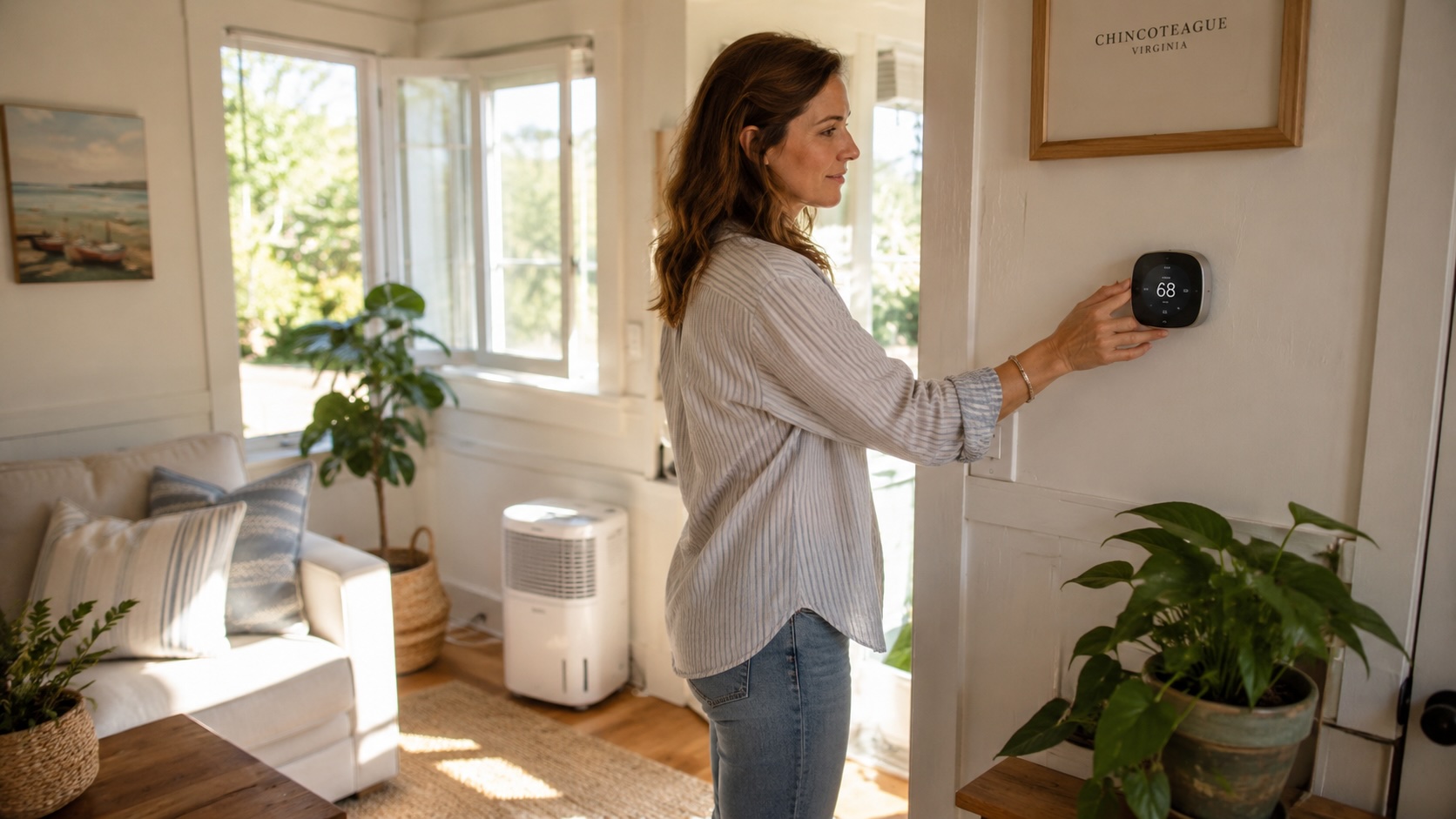
Your air conditioning is your single most important tool, and how you run it matters more than most homeowners realize. An AC system is not just cooling air, it is pulling moisture out of it. That is why setting your thermostat too high while you are away for the day or on vacation can quietly backfire. The house stays warmer and more humid than it should, and mold gets its window. A better strategy is to keep the thermostat within a reasonable range of your normal setting (usually within about five degrees) even when you are gone, and to change your air filter every month during peak humidity. An HVAC tune-up before summer starts is one of the highest-return maintenance investments a coastal homeowner can make.
Then there are the spots humidity loves that most homeowners forget. Closets against exterior walls, garages, laundry rooms, crawl spaces, attics, and any bathroom with weak ventilation are prime territory for musty smells and early mildew. A small dehumidifier in a problem spot pays for itself in a single summer. Run bathroom fans for a full twenty minutes after every shower. Crack closet doors open when you can. Peek at the crawl space at least once a season, since a dry, well-vented crawl space is one of the best mold defenses a coastal home has, and a wet one is the fastest path to a problem.
There is also a coastal-specific layer worth calling out. Homes near the water, in flood zones, or built on lower ground carry higher moisture exposure by default. Waterfront properties in Sandbridge, Chic's Beach, Ocean View, and across the Outer Banks especially benefit from moisture monitors, smart thermostats, and periodic professional inspections of the areas you cannot easily see. If you smell something musty and cannot find the source, do not assume it will pass. Small moisture problems in coastal homes rarely stay small on their own.
Preventing mold in Coastal Virginia and NC homes is genuinely doable, and most of the work is about steady habits rather than expensive projects. Our Thrive Realty agents work with coastal homeowners every day and see which practices really keep homes healthy long term. If you ever want to talk through the specifics for your home, or you need a recommendation on a trusted local HVAC pro or inspector, give the Thrive Realty team a shout. We are happy to share what we know.

Russell Bryant
Owner, Principal Broker, REALTOR® NC & VA | Thrive Realty


or another way